Is Data Analysis the Skill for Me in 2026?
With new AI tools coming out almost every week, many people are starting to question which skills will still matter in the future. Some people are afraid that AI will replace many jobs, while others are unsure which career path to pursue. One skill that keeps coming up in these conversations is data analysis. But the big question is this: is data analysis still worth learning in 2026, or will AI take over everything?
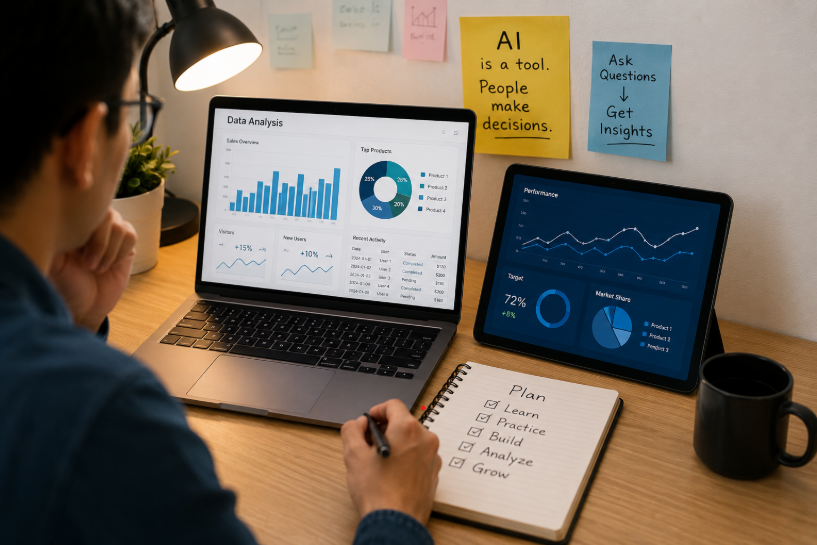
The truth is that data analysis remains a valuable skill, even with the rise of AI. In fact, the growth of AI is one reason why data analysts are still needed. AI tools can generate reports, create charts, and even help organize information, but businesses still need real people who can understand the meaning behind the data. Companies need people who can ask smart questions, explain results clearly, and make good decisions based on the information available. AI can assist with the work, but it cannot fully replace human thinking, creativity, and business understanding.
Data analysis is simply the process of collecting and studying information to help businesses solve problems and make better decisions. For example, a company may want to know why sales are dropping, why customers are leaving, or which product is performing best. A data analyst helps find these answers by working with numbers, trends, and reports. This skill is useful in many industries, including healthcare, banking, marketing, education, logistics, and technology. As long as companies continue to use data to grow their business, data analysts will continue to be important.
One reason many people are interested in data analysis is because it is more beginner-friendly than some other tech careers. You do not need to become a professional programmer before you can start. Many people begin with simple tools like Excel and later move into SQL, Power BI, Tableau, or Python. This makes the field attractive to students, career changers, and people looking for remote opportunities.
However, data analysis is not for everyone. If you completely dislike working with information, numbers, patterns, or problem-solving, you may struggle to enjoy the field. But if you are curious, enjoy learning new things, and like finding answers to problems, then data analysis could be a good fit for you. You also do not need to be a mathematics expert to succeed. What matters most is your ability to think logically, stay consistent, and communicate clearly.
One mistake many beginners make is focusing only on certificates. In 2026, companies care more about practical skills than just course certificates. Employers want to see projects, dashboards, reports, and real examples of what you can do. This is why building a portfolio is very important. The more you practice with real data, the more confident and employable you become.
The good news is that learning data analysis has become easier than ever. There are free videos, online courses, practice datasets, and communities where beginners can learn step by step. With consistency and practice, many people can move from being complete beginners to earning income from data-related work.
At the end of the day, data analysis is still a smart skill to learn in 2026. AI is changing the world, but instead of destroying data analysis, it is changing how analysts work. The people who will succeed are those who learn how to use AI as a tool while still developing their own thinking and problem-solving abilities. Businesses will always need people who can understand data and turn it into real decisions.
So, if you have been wondering whether data analysis is still relevant, the answer is yes. The field is still growing, opportunities still exist, and the demand for people who understand data is not going away anytime soon.