NIGERIAN BUSINESSES ARE DIGITIZING - BUT MOST ARE NOT DIGITALLY READY
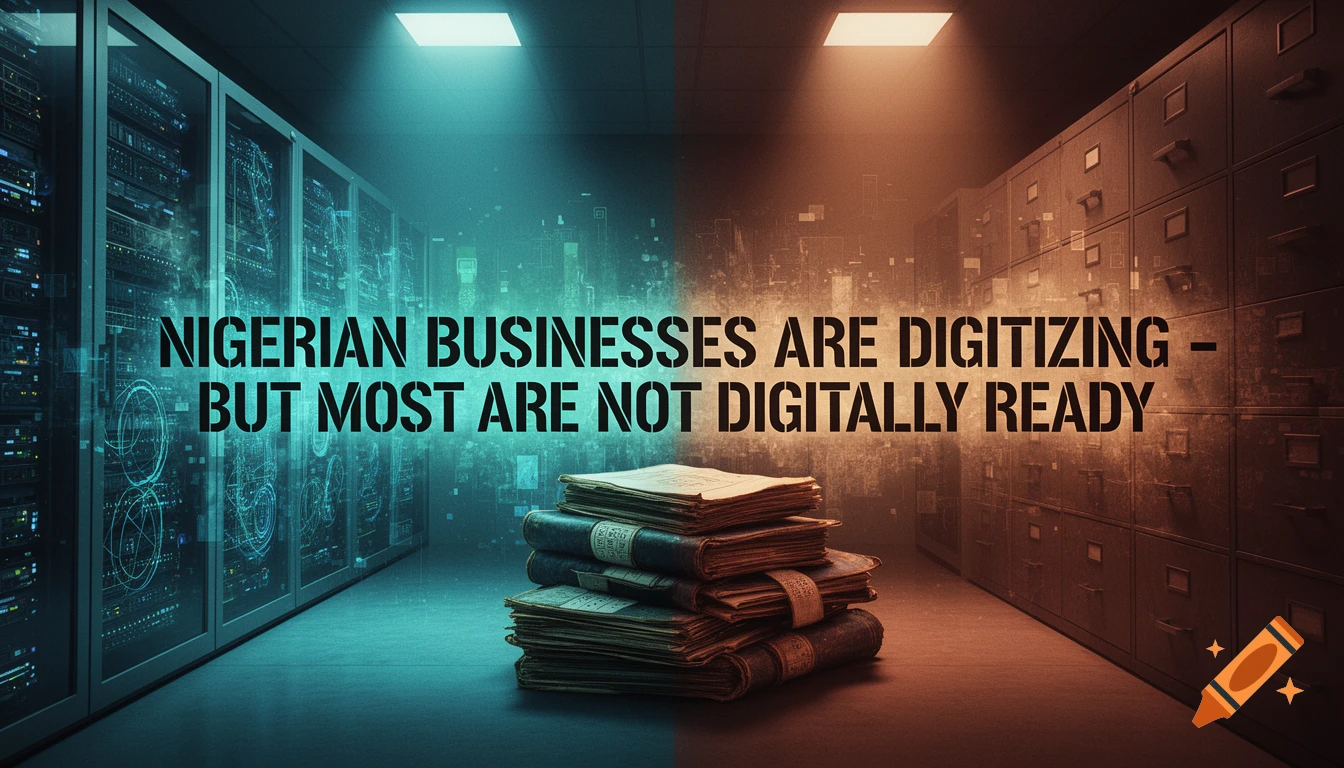
Across Nigeria today, almost every serious business claims to be digital.
There is a website. There are social media pages. Accounting software has been installed. Transactions happen through POS systems. Teams communicate on WhatsApp Business. From the outside, it appears modern and progressive.
But step inside many of these organizations and a different reality emerges.
The tools may be digital, yet the thinking behind them remains manual. Processes are still disorganized. Staff struggle to fully utilize the systems available to them. Reports take too long to generate. Data is entered but rarely analyzed strategically. Software is purchased, yet not properly understood. Technology decisions are often reactive, made only after something breaks or competitors move ahead.
The issue is not the absence of tools. It is the absence of competence.
And in Nigeria’s current economic climate, that gap is expensive.
We are operating in one of the most volatile and competitive business environments in Africa. Inflation continues to pressure operating costs. Customers expect faster service and higher standards. Competition is no longer limited to your immediate location; digital platforms have expanded the battlefield. A business in Lagos competes with one in Nairobi. A firm in Port Harcourt competes with providers offering remote services globally.
Efficiency is no longer a luxury. It is survival.
Yet many organizations continue to lose revenue quietly through inefficient workflows, duplicated efforts, preventable errors, and slow internal processes. These are not minor administrative issues. They directly impact profitability, scalability, and reputation.
A company that cannot operate efficiently with technology in 2026 will struggle to scale within Nigeria’s evolving economy.
The difference between businesses that barely survive and those that scale sustainably is not merely capital. It is competence. It is how deeply technology is integrated into operations. It is whether teams understand digital workflows, organize information properly, interpret data confidently, automate repetitive processes, and communicate professionally across digital platforms.
That integration creates speed. And in business, speed creates leverage.
One of the biggest mistakes many Nigerian businesses make is believing digitization is about purchasing software. They subscribe to platforms, install systems, and even launch applications. But they overlook the critical investment: the people who must use those systems effectively.
Technology without skilled people behind it becomes expensive decoration.
Forward-thinking organizations are beginning to ask a more strategic question. Not “What software should we buy next?” but “How digitally competent is our team?”
Because while tools can be purchased instantly, competence must be built deliberately.
Nigeria’s business landscape is changing rapidly. Remote work is expanding. Digital payments are rising. Younger, digitally native professionals are entering leadership pipelines. International outsourcing opportunities are increasing. Clients expect real-time communication and seamless service delivery.
The organizations that will dominate the next five years will not necessarily be the oldest or the loudest. They will be the ones that prepared early. The ones that invested intentionally in digital capacity before inefficiency became a crisis.
This is no longer a conversation about trends. It is about resilience, competitiveness, and long-term growth within the Nigerian market. Many businesses do not have a technology problem, they have a skills problem, and skills gaps do not close themselves.
At Exelsor Projects Limited, we believe digital competence is foundational for serious organizations that intend to scale in Nigeria’s modern economy. Structured, practical capacity-building is not an optional add-on. It is a strategic investment that strengthens the operational backbone of any business.
The question is no longer whether digitization will continue, It will.
The real question is whether your organization is merely using digital tools, or is truly ready to compete in a digital economy.
Five years from now, the difference will be obvious, and it will favor those who prepared.